
Shipping frozen food with dry ice is one of the most reliable ways to keep products frozen during transit, but proper packing and safety procedures are critical. Done correctly, dry ice helps protect your inventory, reduce spoilage, and improve the customer experience.
This guide explains how to safely pack and ship frozen food with dry ice, including packaging best practices, shipping requirements, safety considerations, and common mistakes to avoid.
What Is Dry Ice?
Dry ice is the solid form of carbon dioxide (CO2). It’s exceptionally cold and behaves differently from regular ice made from water.
- Temperature: Dry ice sits at -109.3°F (-78.5°C).
- Sublimation: It doesn’t melt into a liquid. Instead, it sublimates directly from a solid into a gas.
- Utility: Because it leaves no liquid residue, it keeps packaging dry while maintaining deep-freeze temperatures.
Why Dry Ice Works for Shipping Frozen Foods
For small businesses shipping perishable goods, dry ice is the most reliable cooling agent available.
- Deep Freeze Capability: Regular gel packs only keep food cold. Dry ice keeps food completely frozen for extended periods.
- Moisture Control: Since dry ice sublimates into gas, it prevents your cardboard boxes from getting soggy and collapsing during transit.
- Lightweight: Compared to the heavy weight of frozen water or large quantities of gel packs, dry ice offers superior cooling power per pound.
- Cost-Effective: When sourced locally in bulk, it provides an affordable shipping solution for small-batch frozen deliveries.
Safe Packing Tips for Small Businesses
Packing frozen food with dry ice requires a strategic approach. Follow these steps to ensure your products stay frozen and your packages remain intact.
1. Gather the Right Supplies
You need specific materials to handle and pack dry ice safely.
- Insulated shipping boxes: Use polystyrene (EPS) foam coolers or polyurethane rigid foam boxes.
- Corrugated cardboard outer boxes: The foam cooler must fit snugly inside a sturdy outer box.
- Heavy-duty plastic liners: Use a minimum 2-mil plastic bag to line the inside of your cooler.
- Safety gear: Heavy leather or cryogenic gloves and safety goggles.
2. Calculate How Much Dry Ice You Need
Your dry ice requirement depends on the shipping duration and box size.
- Expect to lose 5 to 10 pounds of dry ice every 24 hours to sublimation.
- For a 2-day transit, pack at least 10 to 15 pounds of dry ice.
- Always round up to account for carrier delays.
3. Layer Your Package Correctly
Cold air sinks, so positioning your dry ice correctly ensures even freezing.
- Place a layer of dry ice at the bottom of the insulated cooler.
- Add your frozen food products on top.
- Place another layer of dry ice on top of the food.
- Fill empty spaces with crumpled packing paper or bubble wrap to prevent items from shifting and to slow sublimation.
4. Don’t Seal the Box Air-Tight
This is a critical safety step.
- As dry ice sublimates, it expands into CO2 gas.
- If the gas has nowhere to go, the box can burst.
- Tape your outer cardboard box securely, but don’t completely tape every seam of the inner foam cooler. Allow the gas a pathway to escape.
Labeling & Handling Considerations
Because dry ice is considered a hazardous material by shipping carriers, you must follow strict handling and labeling rules.
Safe Handling Protocols
- Never touch it with bare hands: Always wear heavy leather gloves to prevent severe frostbite.
- Work in ventilated areas: Sublimating CO2 displaces oxygen. Packing in a small, unventilated room can cause dizziness or asphyxiation.
- Don’t store in regular freezers: Extreme cold can damage the thermostat in a standard commercial or residential freezer.
Carrier Labeling Requirements
To ship dry ice, your box must display specific markings.
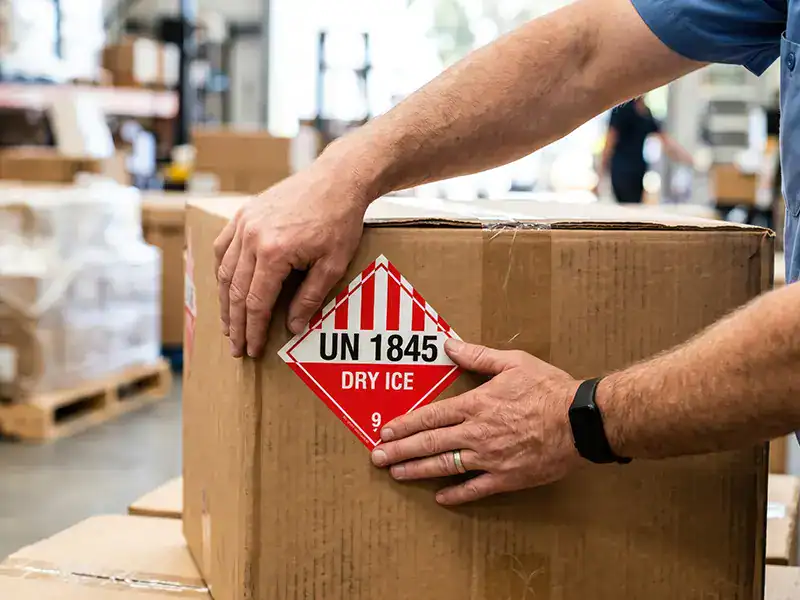
- Class 9 Hazard Label: You must attach a diamond-shaped UN 1845 “Miscellaneous Dangerous Goods” label.
- Weight marking: Clearly write the exact weight of the dry ice (in kilograms) on the outside of the box.
- Consignee/Shipper info: Include full names and addresses for both the sender and the recipient.
- Check with your carrier: FedEx, UPS, and USPS all have slightly different rules and maximum weight limits for dry ice shipments. Confirm their specific guidelines before dropping off your packages.
Common Mistakes to Avoid When Shipping with Dry Ice
Avoid these frequent errors that cost small businesses time and money.
- Buying dry ice too early: Buy your dry ice on the exact day you pack and ship. If you buy it a day early, a large portion will sublimate before it leaves your facility.
- Using standard shipping boxes without insulation: A cardboard box alone provides zero temperature control. Always use a high-quality foam insert.
- Underestimating transit times: Always pack enough dry ice for an extra 24 hours of transit in case of carrier delays.
- Over-packing the dry ice: Using more than 5.5 pounds (2.5 kg) often triggers additional hazardous materials paperwork and fees from air carriers.
- Forgetting to warn the customer: Include a clear warning label or insert a note inside the box explaining how to safely dispose of the remaining dry ice.
Conclusion
Keep it simple: Use insulated packaging, the right amount of dry ice, and proper carrier labels to ensure everything arrives frozen and compliant.
Before shipping, double-check your essentials: heavy-duty gloves, quality foam coolers, and Class 9 hazard labels. Safe prep means smooth delivery.
FAQs: Shipping with Dry Ice
Q: How long does dry ice last in a shipping box?
Dry ice typically lasts 24 to 48 hours in a standard insulated shipping box. You can expect about 5 to 10 pounds of dry ice to sublimate every 24 hours, depending on the thickness of your foam cooler and the outside temperature.
Q: Can I ship dry ice through USPS?
Yes, you can ship dry ice through USPS, but only for domestic shipments. You must clearly mark the package with the dry ice weight and follow all USPS labeling requirements for hazardous materials.
Q: How do I dispose of leftover dry ice safely?
Leave the dry ice in a well-ventilated, secure area at room temperature until it completely sublimates into gas. Never dump it in a sink, toilet, or trash can, as the extreme cold can damage pipes or cause sealed containers to burst.
Q: Do I need special training to ship with dry ice?
While formal certification isn’t strictly required for small amounts of dry ice, you must understand your carrier’s hazardous materials guidelines. Anyone handling the ice should be trained on the dangers of frostbite and the need for ventilation.
Q: Can dry ice freeze my products if they aren’t already frozen?
Yes, but it’s not recommended. You should always deep-freeze your food products in a commercial freezer before packing. Relying on dry ice to freeze warm items burns through the ice too quickly, jeopardizing the shipment.
Q: Will dry ice alter the taste of my food?
No, carbon dioxide gas won’t alter the taste of properly sealed food. However, it can make carbonated beverages go flat or slightly carbonate high-moisture fruits if they’re left unsealed. Keep all food tightly wrapped.
Q: What happens if my package is delayed?
If a package is delayed beyond the dry ice sublimation window, the food will begin to thaw. This is why you should always pack an extra 24 hours’ worth of dry ice and ship early in the week to avoid weekend warehouse holds.
Q: Is dry ice cheaper than gel packs?
Dry ice is generally more expensive per pound than gel packs and requires costlier insulated packaging. However, for shipping fully frozen foods, gel packs are ineffective, making dry ice the only viable option.







Leave A Comment