
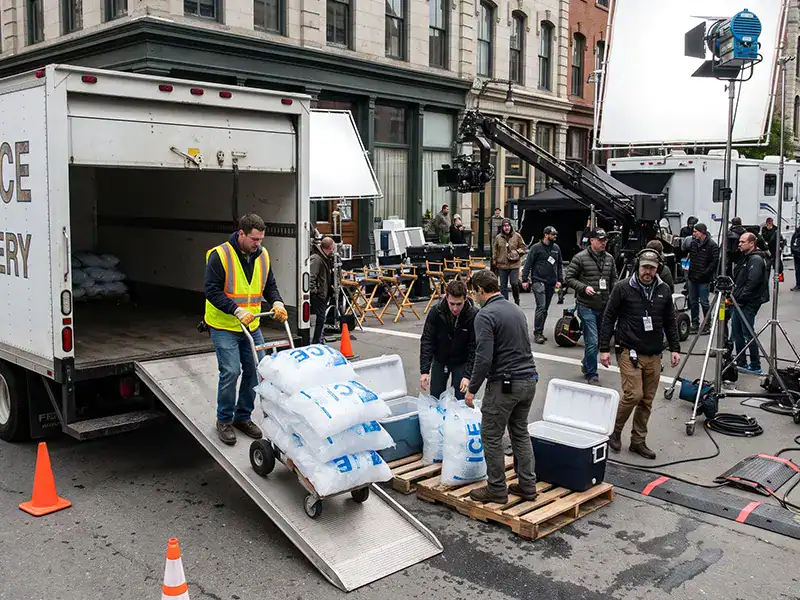
Film and TV sets run on tight schedules. Every delay costs money, sometimes thousands of dollars per hour. Ice might seem like a minor detail compared to lighting rigs or camera equipment, but it plays a bigger role than you may realize.
From keeping craft services food safe to cooling down overheated gear, ice delivery is one of those behind-the-scenes services that production teams can’t afford to overlook. Southern California’s warm climate makes this especially true for local shoots.
Why Does Ice Matter on Film and TV Sets?
Productions typically need ice for:
- Food safety — Craft services and catering tables must keep perishable food at safe temperatures throughout the day.
- Crew comfort — Cast and crew working 12+ hour days need cold drinks, especially during summer shoots.
- Equipment cooling — Some camera and lighting equipment can overheat during extended outdoor use.
- On-screen props — Scenes set in bars, restaurants, or kitchens often require ice as a visual element.
- Special effects — Fog machines and certain practical effects rely on dry ice or regular ice.
Because each use case demands a specific type and volume of ice, most productions partner with dedicated suppliers instead of scrambling for last-minute grocery store runs.
What Happens When a Production Runs Out of Ice?
Running out of ice mid-shoot creates a ripple effect. Food spoils faster in the heat, which can delay meal breaks mandated by union rules. Crew members become dehydrated and less productive. Scenes demanding ice as a prop can’t be filmed without it.
According to the Screen Actors Guild (SAG-AFTRA), meal breaks must occur within specific time windows, and delays can trigger penalty pay for productions. A simple ice shortage can quickly turn into an expensive problem.
This is why production coordinators often build ice delivery into their logistics planning from day one, not as an afterthought.
How Does Ice Delivery Work for Film Productions?
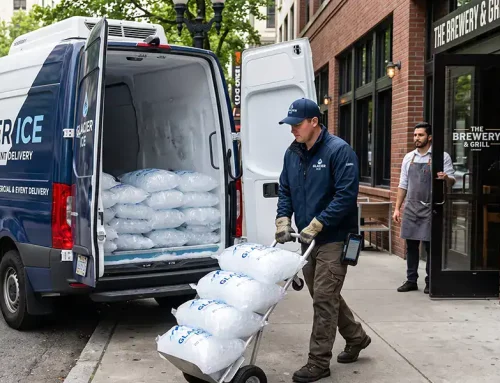
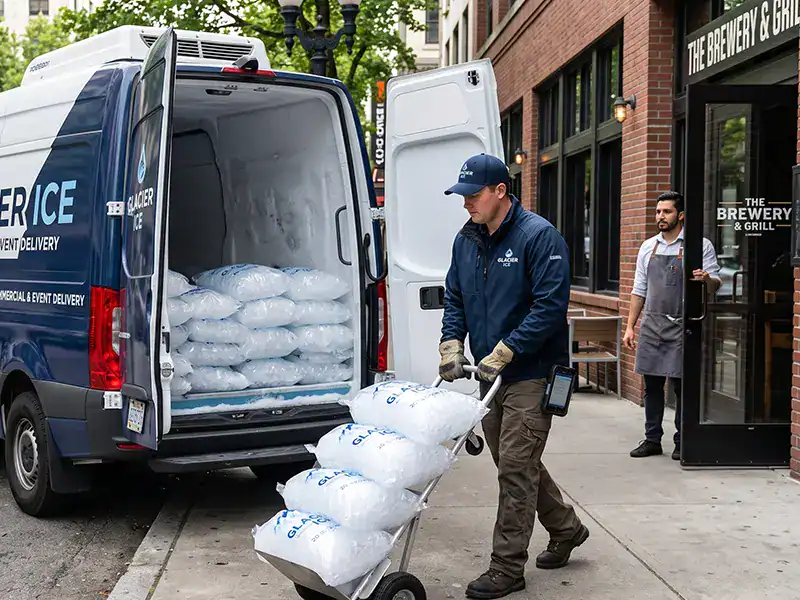
Most ice suppliers serving the entertainment industry offer scheduled or on-call delivery based on production needs. Here’s what the process typically looks like:
- Initial consultation — The production team shares shoot dates, locations, and estimated ice needs.
- Delivery scheduling — The supplier coordinates drop-off times around the shooting schedule, often early in the morning before call time.
- On-set delivery — Ice arrives directly at the location, sometimes multiple times per day for longer shoots.
- Flexible adjustments — Weather changes or schedule shifts may require last-minute ice orders, so responsive suppliers keep a backup supply.
Productions filming in remote locations or across multiple sites in Southern California may need suppliers capable of handling multi-location deliveries.
What Types of Ice Do Productions Typically Need?
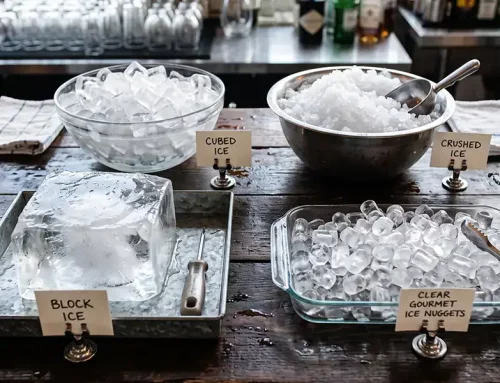
Productions commonly order:
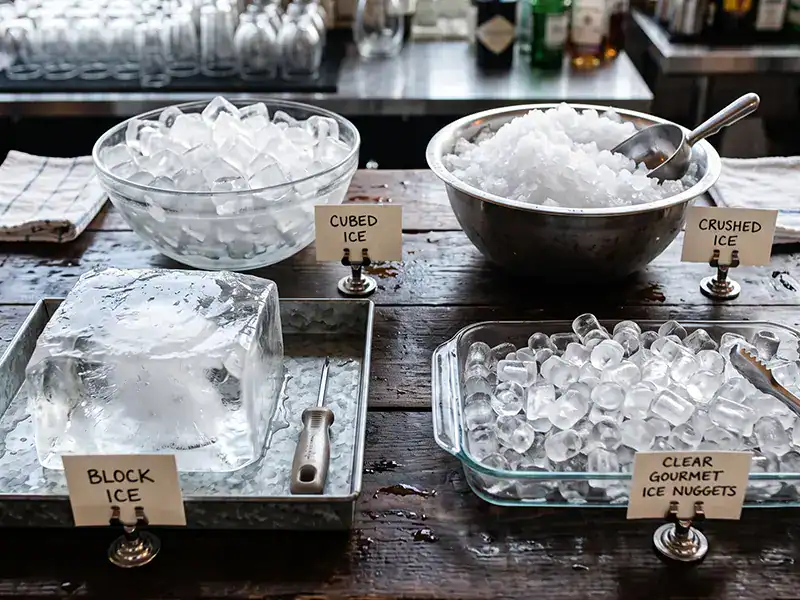
- Block ice for prop scenes or large-scale cooling where slow melting matters.
- Cubed ice, standard for drinks and craft services tables.
- Crushed ice for beverage stations and certain visual effects.
- Dry ice for fog effects, special scenes, or extreme cooling needs.
Why Do Southern California Productions Rely on Local Ice Suppliers?
Southern California’s film industry is massive, and its climate creates unique demands. Summer temperatures regularly climb into the 90s, and outdoor shoots in areas like the Inland Empire or Mojave Desert can push even higher.
Local ice suppliers offer a few advantages over national chains or big-box stores:
- Faster response times for last-minute orders or weather changes.
- Familiarity with local filming permits and location logistics.
- Established relationships with production coordinators who return for multiple projects.
- Flexible delivery windows that match early call times.
Working with a supplier who understands the entertainment industry’s pace, rather than a generic retailer, reduces the risk of delays.
How Should Production Teams Choose an Ice Supplier?
Choose a supplier based on reliability and flexibility if your production has tight deadlines or multiple shoot locations. Choose based on volume capacity if you’re running a large-scale production with hundreds of crew members.
Here’s what to evaluate before signing on with a supplier:
- Delivery reliability — Can they guarantee on-time delivery, even with early call times?
- Capacity — Can they handle the volume your production needs, especially for multi-day shoots?
- Flexibility — Will they accommodate last-minute changes to the schedule or location?
- Experience with productions — Have they worked with film or TV crews before?
- Range of ice types — Do they offer block, cubed, crushed, and dry ice?
Asking these questions upfront saves headaches once cameras start rolling.
Keep Your Production Cool & On Schedule
Ice delivery isn’t glamorous, but it’s a logistical detail that keeps productions running without delays.
If you’re planning a production in Southern California, build ice delivery into your location logistics early. A reliable supplier who understands the industry’s pace can save you time, money, and a few headaches along the way.
FAQs: Ice Delivery for Film & TV
Q: Why do film sets need ice delivery instead of buying ice locally?
Film sets often need large quantities of ice delivered on a schedule that matches tight production timelines. Local grocery store runs waste crew time and don’t guarantee consistent supply for multi-day shoots.
Q: How much ice does a typical production need per day?
Ice needs vary based on crew size, weather, and whether ice is used as a prop. A 50-person crew shooting outdoors in the summer heat may need several hundred pounds of food per day for food safety and crew comfort alone.
Q: What’s the difference between block ice and cubed ice on set?
Block ice melts slower and works well for extended cooling or prop scenes. Cubed ice is the standard choice for drinks and craft services because it’s easier to portion and serve.
Q: Can ice suppliers accommodate last-minute schedule changes?
Reliable suppliers build flexibility into their service, especially for productions, since shoot schedules often shift due to weather, permits, or script changes.
Q: Is dry ice used in filming, and what’s it for?
Yes. Dry ice is commonly used to create fog effects for scenes requiring a misty or eerie atmosphere. It requires careful handling due to its extremely low temperature.
Q: How far in advance should a production book ice delivery?
Booking at least a few days in advance helps suppliers plan capacity, though many entertainment-focused suppliers also accommodate same-day or next-day requests when possible.
Q: Does ice delivery affect production budgets significantly?
Ice delivery is typically a small line item compared to other production costs, but running out of ice can trigger costly delays, including penalty pay tied to delayed meal breaks.
Q: Are there health code requirements for ice used in food service on set?
Yes. Ice used for food and beverages must meet local health department standards for food safety, which is why many productions prefer licensed suppliers over informal sources.




Leave A Comment