

Have you ever popped open a drink, dropped in a couple of ice cubes, and wondered why they never look like the perfect crystal ices in commercials?
If so, you’re not alone. Homemade ice cubes almost always come out cloudy — and that’s a matter of science.
In restaurants and bars, ice is often crystal clear. It enhances the presentation of drinks and gives them a premium feel. Meanwhile, the cubes made in your freezer tray look dull and foggy.
Why the difference? And more importantly, can you make more transparent ice at home?
What Makes Ice Cloudy in the First Place
The short answer: air and impurities get trapped inside as the water freezes.
When water turns into ice, something surprising happens:
Water Purifies Itself as It Freezes
- Water molecules form tight crystalline structures when they freeze.
- As ice forms, dissolved gases (like oxygen and nitrogen) and minerals can’t fit into the crystal lattice.
- These gases and particles are pushed into the part of the water that freezes last — typically the center of the cube.
Why the Middle Gets Cloudy
- In a standard freezer tray, ice begins to form around the edges.
- The outside freezes first.
- The remaining water in the middle traps all the unwanted gas and minerals, producing a white, cloudy core.
This trapped mixture of air and solids refracts (bends) light instead of letting it pass straight through — and that’s what makes ice look cloudy.
Are Cloudy Ice Cubes Safe?
Yes! Cloudy ice is safe — as long as the water used to make it was potable.
- The cloudiness is a physical effect (due to air and dissolved minerals), not contamination.
- Minerals like calcium and magnesium occur naturally in tap water and are usually harmless.
That said, if your water is already low-quality, filtering it before freezing can improve clarity and taste.
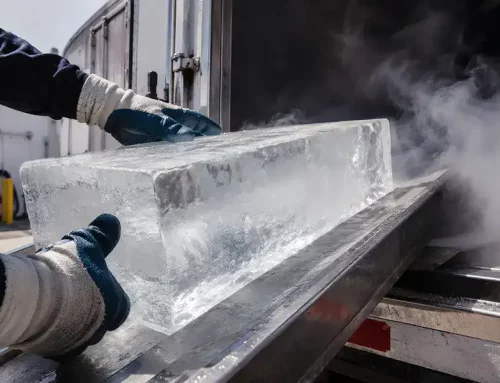
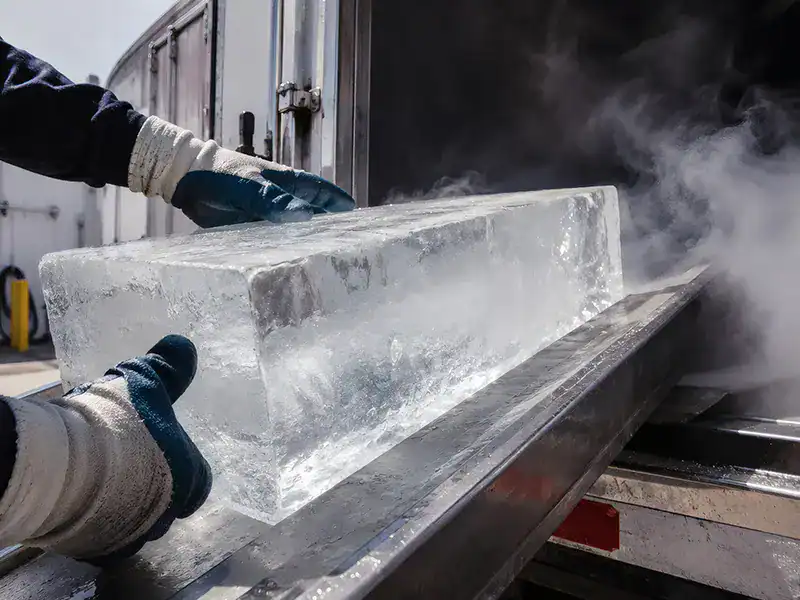
Why Commercial Ice Is Often Clearer Than Home Ice
Commercial ice makers use two key tricks you don’t get with a standard home freezer:
1. Directional Freezing
This method freezes water from one direction (usually top-down), forcing air and impurities to the bottom rather than trapping them inside the final cube.
2. Controlled Water Flow and Filtration
Commercial systems:
- constantly circulate water
- Use filters to reduce minerals
- freeze water slowly at consistent temperatures
All of that allows bubbles and solids to escape before ice fully forms.
The result? Ice that’s far more transparent and appealing than typical freezer ice.
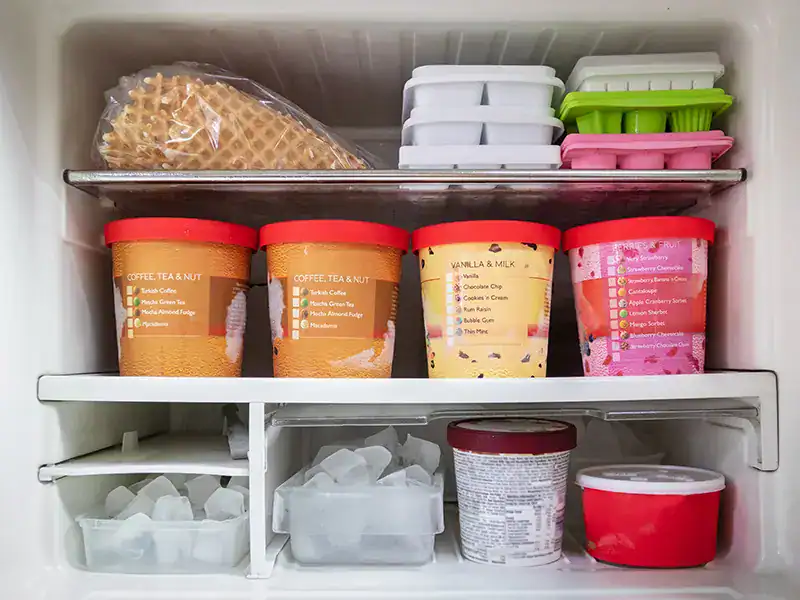
Why Your Freezer Makes Cloudy Ice — Even From Clear Water
Even when you start with crystal-clear water, you still may end up with cloudy cubes because of a few freezer-related factors:
Freezing Speed & Temperature
- Most home freezers freeze water quickly and from all sides — not slowly from top down.
- Rapid freezing traps more air.
- Temperature fluctuations make this worse by freezing pockets at irregular intervals.
Dissolved Air and Minerals Still Matter
- Tap water contains microscopic gas bubbles and minerals.
- When water freezes from the outside in, these get squeezed toward the center — creating that white look.
Freezer Trays Aren’t Optimized for Ice Clarity
Commercial bars use specialty molds and controlled freezing units; your basic tray doesn’t. But don’t worry — there are ways to get closer to restaurant-quality ice at home.
How to Make Clearer Ice at Home (Step by Step)
You can improve ice clarity with some simple tweaks:
1. Use Cleaner Water
- Filtered water reduces impurities.
- Boil then cool water before freezing — this helps release trapped air.
2. Freeze Slowly
- Slow freezing gives gases more time to escape before they’re locked in.
- Try raising freezer temperature slightly for a slower freeze — just be patient!
3. Directional Freezing Method
The goal is to mimic commercial ice machines:
How it works:
- Insulate the sides and bottom (e.g., using a small cooler inside your freezer).
- Only the top surface is exposed.
- Water freezes from the top down.
- Impurities are pushed to the bottom — leaving the top ice much clearer.
This method is the key used by cocktail enthusiasts and DIY clear ice makers.
Quick Tips for Even Better Ice
Want even clearer cubes or slabs like the ones in bars?
Use Distilled or Boiled Water
- Removes many dissolved minerals
- Doesn’t guarantee perfection on its own — but it helps dramatically when paired with directional freezing.
Be Patient
- Slow is better: fast freezing traps air.
- Let cubes freeze longer than usual.
Use Quality Molds
- Clear ice molds with insulated sides help guide the freeze pattern.
Why Clear Ice Really Matters (Beyond Looks)
Crystal-clear ice looks cool — and there are practical benefits as well:
Slower Melting
- Ice without trapped air melts slower.
- That keeps drinks cooler longer without watering them down.
Better Presentation
- Clear cubes elevate the look of cocktails and beverages.
- They offer an easy way to impress your guests.
More “Instagram-Worthy”
- Drinks with clear ice look better in photos and videos.
While cloudy ice doesn’t affect safety or basic function, clear ice delivers an elevated experience for special occasions.
Common Myths About Ice Clarity
Let’s clear up a few misconceptions:
Myth 1: Cloudy ice means dirty water.
False — it often just means air and normal minerals got trapped.
Myth 2: Boiling water fixes everything.
Boiling helps release air, but the freezing direction still matters most.
Myth 3: You need special tools.
Not always — directional freezing with household items goes a long way.
Final Takeaway
Cloudy ice isn’t a mystery — it’s physics.
- Ice cubes become cloudy because dissolved gases and particles are pushed into the final stage of freezing.
- Commercial ice is more transparent due to controlled freezing and filtration.
- You can dramatically improve the clarity of homemade ice with simple techniques such as boiling, slow freezing, and directional methods.
Whether you want more transparent ice for drinks, entertaining, or just because it looks cool, understanding the science gives you the power to make it happen.
FAQs About Ice Clarity
What makes ice cubes made at home look cloudy?
Cloudiness in homemade ice is caused by tiny air bubbles and dissolved minerals getting trapped as water freezes unevenly from all sides.
Is cloudy ice safe to use in drinks?
Cloudy ice is safe as long as the water you froze was clean and potable; the cloudiness is a physical effect, not harmful contamination.
Why is the restaurant or commercial ice clearer than mine at home?
Commercial ice machines use controlled, directional freezing and filtration, which pushes air and impurities out before ice fully forms, producing clearer ice.
Can I make clearer ice at home without special tools?
Yes — using filtered or boiled water and techniques like slow or directional freezing can significantly improve clarity even with basic kitchen tools.
Does using filtered water really make ice clearer?
Filtered (or distilled) water removes minerals and impurities, helping minimize cloudiness, especially when combined with other freezing methods.
Why does freezing speed affect ice clarity?
Rapid freezing traps more air and minerals inside the ice. Slower, more controlled freezing allows bubbles to escape, leading to more transparent ice.
What is directional freezing, and how does it improve ice clarity?
Directional freezing means freezing water from one direction (typically top down) so that gases and impurities are pushed to one end, resulting in clearer ice on the opposite side.
Does cloudy ice melt differently from clear ice?
Cloudy ice contains trapped air pockets that can cause it to melt slightly faster and dilute drinks more quickly than dense, clear ice cubes.


Leave A Comment