
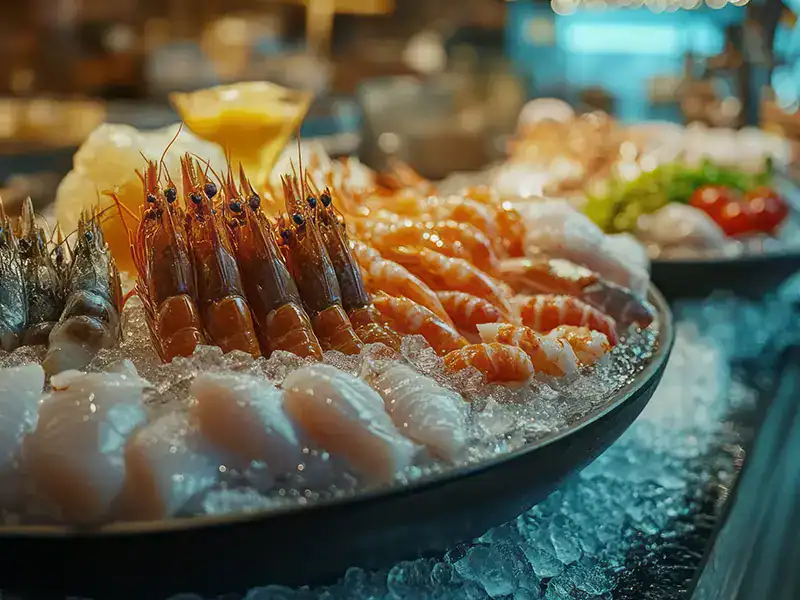
Ice is more than practical — it’s part of the presentation. It can keep food safe while making displays look cleaner, fresher, and more appealing.
This guide covers how to choose the right type of ice, set up displays that look better, and avoid common mistakes. You’ll also get simple, real-world tips for buffets, catering, seafood counters, and grab-and-go setups.
Why Ice Matters in Food Displays
Ice plays two key roles: temperature control and visual appeal.
It supports food safety
Cold food needs to stay cold. Ice helps hold safe temperatures for items such as:
- Seafood
- Salads
- Fruit trays
- Dairy products
- Chilled desserts
- Sandwiches
- Raw bar items
In food service, cold foods should be kept at 41°F or below. Ice supports that goal during service, transport, and display.
It improves presentation
Ice can make food look:
- Fresher
- Cleaner
- Brighter
- More premium
- More abundant
A well-iced display also gives shape and structure to the setup. It lifts products, fills gaps, and guides the eye.
It adds texture and contrast
Ice reflects light. That sparkle can make food stand out, especially:
- Oysters and shrimp
- Whole fish
- Fresh fruit
- Bottled drinks
- Cold appetizers
Clear or crushed ice can create a strong contrast against colorful food. That contrast makes the display more appealing.
Types of ice for food displays
Not all ice works the same way. The right choice depends on the food, the setting, and how long the display needs to last.
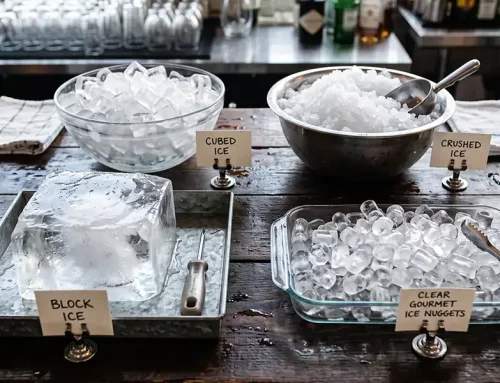
Crushed ice
Crushed ice is one of the most common choices.
Best for:
- Seafood displays
- Salad bars
- Fruit trays
- Buffet tables
Benefits:
- Easy to shape
- Covers large areas well
- Creates a natural, fresh look
- Helps nestle food in place
Things to watch:
- Melts faster than larger ice forms
- Needs refilling more often
Cubed ice
Cubed ice works well when appearance matters, but direct contact with food is limited.
Best for:
- Beverage stations
- Bottled drinks
- Packaged items
- Ice bins for self-serve setups
Benefits:
- Lasts longer than crushed ice
- Easy to manage
- Good for drainage systems
Flake ice
Flake ice is soft, flexible, and easy to spread.
Best for:
- Seafood counters
- Produce displays
- Delicate items
Benefits:
- Gentle on food
- Creates full, even coverage
- Keeps products chilled without harsh edges
Block or sculpted ice
This option is more decorative than practical for direct chilling, though it can do both in the right setup.
Best for:
- Weddings
- Corporate events
- Luxury buffets
- Brand displays
Benefits:
- Strong visual impact
- Custom shapes and branding options
- Creates a memorable centerpiece
Best foods to display on ice
Some foods benefit more than others from an ice-based setup.
Top choices include:
- Raw seafood
- Shrimp cocktail
- Oysters and clams
- Sushi ingredients
- Fresh-cut fruit
- Yogurt parfaits
- Cheese cups
- Chilled desserts
- Bottled juices
- Cold deli items
Foods that need extra care
Some foods can sit near ice, but not directly on it.
Examples:
- Leafy greens that wilt from water contact
- Bread products that get soggy
- Open sauces without sealed containers
- Cut items that absorb water easily
For these foods, use:
- Raised trays
- Inserts
- Bowls
- Sealed containers
- Drip barriers
How to build an eye-catching ice display
A strong display is not just cold. It should also look clean, balanced, and easy to shop.
1. Start with the right base
Choose a display container that supports drainage and stability.
Good options include:
- Insulated pans
- Display trays
- Buffet wells
- Food-safe tubs
- Retail merchandisers
Your base should:
- Hold enough ice
- Allow meltwater to drain
- Keep food from tipping
- Match the style of the event or store
2. Layer the ice
Do not just dump ice into a tray.
Build it in layers:
- Add a base layer first
- Shape the surface based on product size
- Create height in the back
- Keep the front lower for visibility
- Pack ice around containers, not over the food unless appropriate
This creates depth and makes the display easier to restock.
3. Use height to create impact
Flat displays can look dull. Ice makes it easy to build shape.
Try these ideas:
- Mound ice higher in the center
- Angle seafood upward
- Raise bowls with hidden risers under ice
- Create tiered sections for different foods
Height helps the display look full, even when product volume is limited.
4. Keep color in mind
Ice looks best when it supports the food’s natural color.
Pair it with:
- Green garnish for contrast
- Black trays for a bold look
- White platters for a clean feel
- Metal pans for a professional setup
Avoid too many visual elements. Let the food and ice do the work.
5. Add signage without clutter
Signs help guests or shoppers identify what they see.
Keep labels:
- Short
- Clean
- Waterproof if possible
- Easy to read from the front
Place them where they do not block the food.
Tips for keeping displays fresh and safe
A beautiful display fails if it looks wet, sloppy, or unsafe.
Refresh ice often
Ice melts fast under:
- Warm lighting
- Outdoor heat
- Heavy service
- High room temperatures
Plan to check and refill ice often. For long events, assign this task to one team member.
Manage meltwater
Standing water can ruin the display’s appearance and compromise food safety.’
Use:
- Drain trays
- Perforated inserts
- Sloped pans
- Built-in drainage systems
Never let food sit in dirty meltwater.
Protect food from direct water contact
Direct contact is fine for some items, like shell-on seafood. For many foods, it is better to use a barrier.
Helpful tools:
- Stainless hotel pans
- Acrylic trays
- Bowls set into ice
- Food-safe liners
- Sealed containers
Monitor temperature
Do not rely on appearance alone.
Use:
- Probe thermometers
- Infrared thermometers for surface checks
- Time logs during long service periods
The display should look good, but safe temperature control comes first.
Smart display ideas for different settings
Different environments need different ice strategies.
Buffet events
For buffets, focus on access and clean presentation.
Best practices:
- Use shallow trays for fast service
- Refill in small batches
- Keep backup trays chilled
- Replace soggy garnish quickly
- Avoid overcrowding
Catering and weddings
Here, appearance matters as much as function.
Try:
- Decorative ice beds for seafood bars
- Sculpted ice accents
- Symmetrical layouts
- Clear signage for allergens and item names
- Lighting that highlights the display without heating it
Retail seafood counters
Retail displays need to last and look fresh all day.
Focus on:
- Frequent re-icing
- Proper drainage
- Product rotation
- Consistent spacing
- Clean edges and no pooled water
A full, bright seafood bed helps signal freshness and quality.
Grab-and-go displays
For packaged cold foods, ice can support both cooling and visual appeal.
Use it for:
- Bottled drinks
- Yogurt cups
- Salads
- Fruit cups
- Deli packs
Choose ice bins or merchandisers that make restocking easy and keep labels visible.
Common mistakes to avoid
Even a simple ice display can go wrong if the setup is rushed.
Avoid these issues:
Using too little ice
- Food warms up faster
- The display looks sparse
- Ignoring drainage
- Meltwater collects
- Food packaging gets wet
- The setup looks messy
Overloading the display
- Guests cannot see what is offered
- Products shift or sink
Using the wrong type of ice
- Large cubes may not hold delicate items
- Crushed ice may melt too quickly for long service
Forgetting maintenance
- Ice needs regular checks
- A great setup can decline fast
Letting style beat safety
- Decorative displays still need safe temperatures
- Looks should never replace proper handling
Simple ways to make ice displays look more premium
You don’t need a huge budget to create a strong display.
Small upgrades that help:
- Use clear, fresh ice
- Keep tray edges clean
- Add fresh herbs or citrus as accents
- Group similar items together
- Use matching serveware
- Replace melted ice before the display looks wet
- Keep labels neat and consistent
These details can raise the perceived value of the food.
Final thoughts
Learning how to use ice to enhance food displays is about more than decoration. Ice helps protect food, improve freshness, and make your setup more attractive. It can turn a basic tray into a display that feels polished and professional.
For the best results:
- Choose the right type of ice
- Build the display with shape and height
- Protect food from excess water
- Refill and refresh often
- Keep safety at the center of every decision
A clean, well-managed ice display helps food look its best and gives guests more confidence in what they are about to eat.
FAQs: Using Ice in Displays
What type of ice is best for food displays?
Crushed or flake ice is usually best for food displays because it is easy to shape and gives even coverage. Cubed ice works well for beverages and packaged items.
Can food sit directly on ice?
Some foods can, such as shellfish or sealed products. Others should be placed in trays, bowls, or containers to avoid water damage and sogginess.
How often should ice be replaced in a display?
It depends on the room temperature, lighting, and service time. Check it often and refresh it before the display starts to look wet or low.
Is ice enough to keep food safe?
Ice helps, but it is not the only step. You should also monitor food temperature, use proper containers, and follow safe handling practices.
How do I keep an ice display from getting messy?
Use good drainage, avoid overfilling, and remove meltwater regularly. A clean tray and regular re-icing make a big difference.
What foods look best on ice?
Seafood, fruit, bottled drinks, chilled desserts, and deli items often look great on ice because their cold presentation enhances their fresh appearance.
Can I use decorative ice at events?
Yes. Block ice, carved ice, and shaped ice can add visual impact at weddings, parties, and branded events. Just make sure the display still meets food safety requirements.
How can I make a small ice display look more impressive?
Use height, clean lines, fresh garnish, and clear labels. Even a small display can look premium when it is well-organized and regularly maintained.






Leave A Comment