
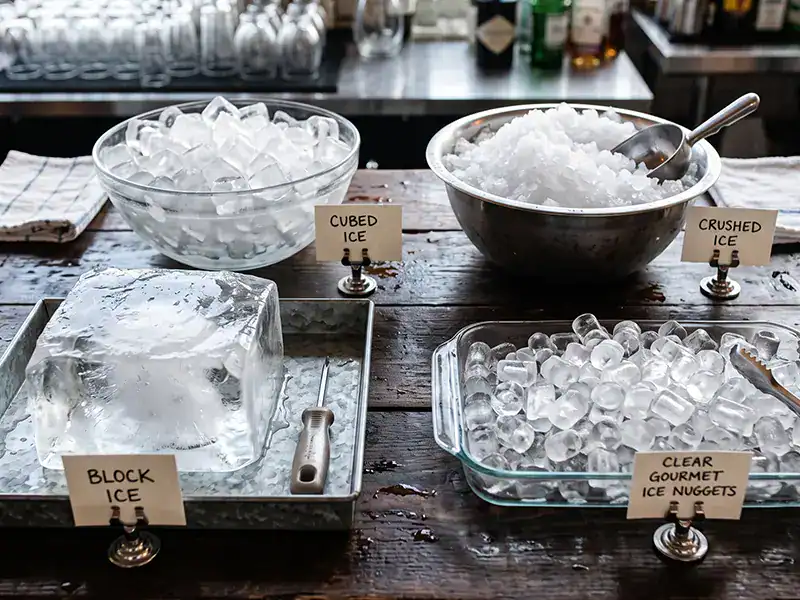
Some types melt slowly and keep drinks cold without watering them down. Others chill fast but don’t last as long.
Understanding the differences helps you avoid diluted beverages, unattractive drinks, and unnecessary expense.
Ice Types
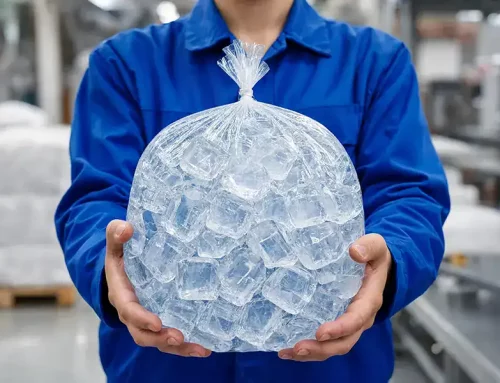
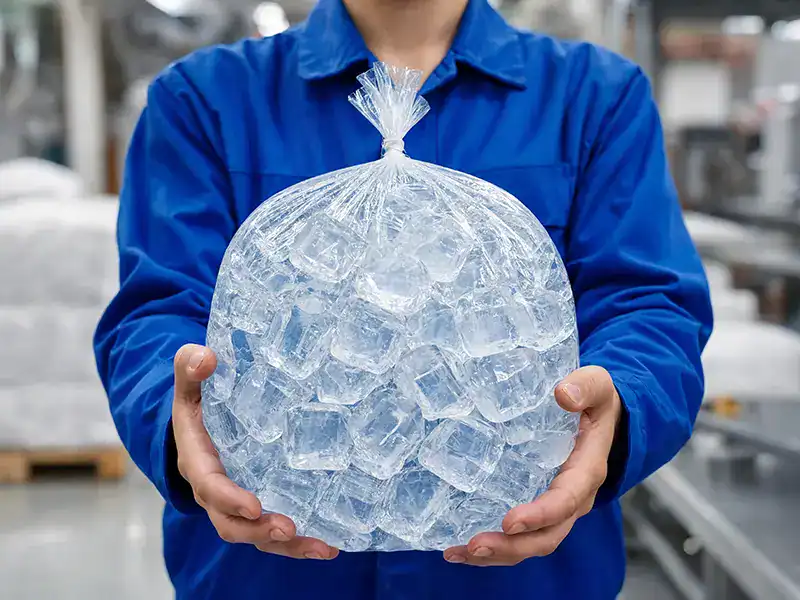
- Cube Ice: The most common type. Its uniform shape makes it suitable for soft drinks, cocktails, and everyday food-service use. Cube ice melts at a moderate rate and is easy to store, scoop, and dispense in high volumes.
- Nugget Ice: Soft, chewable pellets. Popular in sodas, smoothies, and healthcare settings.
- Flake Ice: Thin, irregular pieces that conform closely to products. It is commonly used for seafood displays, salad bars, blended drinks, and injury treatment because it cools quickly and packs evenly.
- Gourmet or Clear Ice: Dense, crystal-clear cubes or spheres. Used in cocktails and upscale drink service.
- Crushed Ice: Small, irregular pieces. Cools drinks fast but melts quickly too.
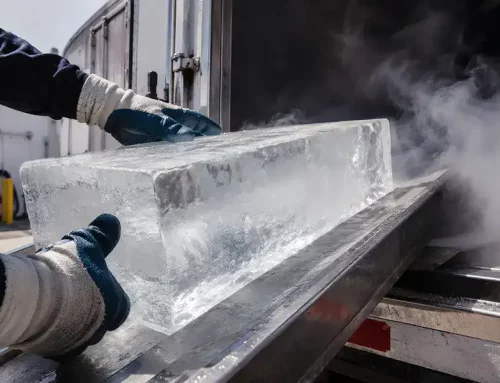
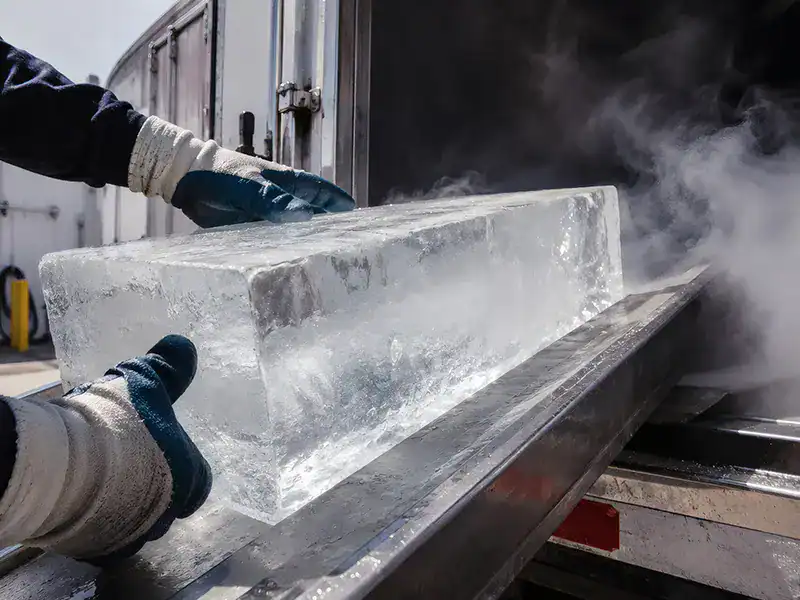
- Block Ice: Large, solid chunks. Melts slowly, making it great for coolers and ice sculptures.
Choosing Ice Based on Use Case
The right ice depends on how you plan to use it.
- Everyday Beverages: Cube ice works well for water, soda, and juice. It melts slowly and doesn’t dilute the drink too fast.
- Cocktails: Gourmet or clear ice is the top choice. It melts slower than regular cubes and doesn’t cloud the drink.
- Fast Food and Fountain Drinks: Nugget ice is easy to chew and blends well with carbonated beverages.
- Coolers and Camping: Block ice is best here. It lasts significantly longer than cubed or crushed ice, keeping food and drinks cold over multiple days.
- Food Displays: Flake ice is standard for keeping seafood, produce, and deli items fresh and visually appealing.
- Medical or Therapeutic Use: Nugget or crushed ice is often preferred for ice packs and patient comfort, since it conforms to the body.
- Events and Parties: Crushed ice is useful for chilling bottles or quickly filling large containers.
Factors to Consider When Selecting Ice
A few key factors should guide your decision:
- Melt Rate: Denser ice (like block or clear ice) melts slower. Choose this when you need a longer-lasting cold without dilution.
- Purpose: Drinking, displaying, cooling, or therapeutic use each calls for a different type of ice.
- Volume Needed: Large events may require block or bagged ice in bulk, while home use typically only needs cube or nugget ice.
- Equipment: Not all ice makers produce every type. Check what your machine supports before committing to a specific style.
- Clarity and Presentation: For cocktails or professional settings, clear ice adds a polished look that regular cubes can’t match.
- Texture Preference: Some people prefer the chewability of nugget ice, while others prefer the solid crunch of cube ice.
- Storage Space: Block ice takes up more room than crushed or cubed ice, so storage capacity matters for bulk purchases.
Choose Ice with Confidence
Choosing the right ice comes down to matching the type to your specific need. Cube ice works for most everyday situations. Nugget ice suits fountain drinks and therapeutic use. Block ice keeps coolers cold for days, and clear ice elevates any cocktail.
Think about melt rate, texture, and purpose before deciding. Doing so can help you get the exact performance you’re looking for, whether it’s for a backyard party, a restaurant, or your kitchen at home.
Need help picking the right ice solution for your business or next event? Contact our team today for expert recommendations and reliable delivery.
FAQs: How to Choose the Right Ice
Q: What’s the difference between nugget ice and crushed ice?
Nugget ice is made of soft, compressed pellets that are chewable and slow to melt compared to crushed ice. Crushed ice is made by breaking larger ice chunks into smaller pieces, resulting in a faster melt rate.
Q: Why does clear ice matter for cocktails?
Clear ice melts slower than cloudy ice because it’s denser and contains fewer air bubbles. This means it won’t dilute your drink as quickly and will also look more polished.
Q: How long does block ice last in a cooler?
Block ice can last 2 to 5 days in a well-insulated cooler, depending on temperature and how often the cooler is opened.
Q: Can I make clear ice at home?
Yes, but it requires special trays or a directional freezing method to remove air bubbles. Standard ice trays typically produce cloudy ice.
Q: What type of ice is best for seafood displays?
Flake ice is best for seafood. Its small, soft texture molds around food items, keeping them cold without causing damage.
Q: Is nugget ice healthier or safer than cube ice?
Neither type is inherently healthier, but nugget ice is often preferred in medical settings for patient comfort, since it’s softer and easier to chew.
Q: How much ice do I need for a party?
A general rule is 1 to 1.5 pounds of ice per guest for drinks alone. If you’re using ice for both drinks and food displays, plan for more.
Q: Do different ice makers produce different ice types?
Yes. Home ice makers typically produce cube ice, while commercial machines can be built for nugget, flake, or block ice, depending on the model.




Leave A Comment